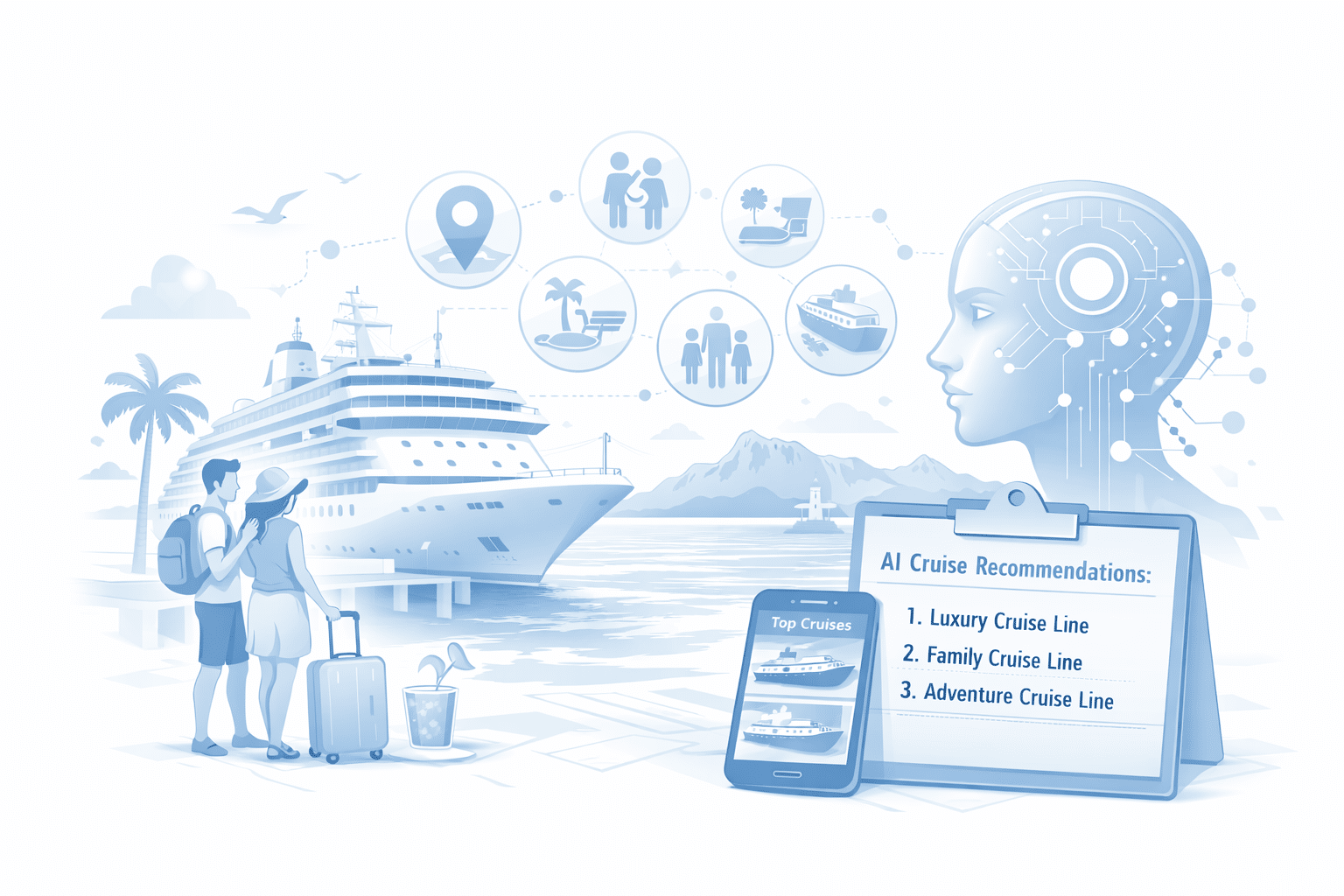
AI Visibility Case Study: Cruise Line Discoverability in the Age of AI Travel Planning
Cruise travel has always depended on inspiration. Travellers rarely begin their journey with a specific cruise line in mind. Instead, they start with a question:
“What’s the best cruise line for the Mediterranean?”
“Which cruise line is best for couples?”
“What cruise line offers the best luxury experience?”
Historically these questions led to search engine results pages filled with travel blogs, review sites, and booking platforms. Today the discovery process increasingly begins inside AI assistants.
Instead of reviewing ten articles, travellers receive a curated shortlist of cruise brands accompanied by a summary explaining why those brands were selected. This shift fundamentally changes how cruise lines become visible.
Visibility no longer depends solely on ranking in search results. It depends on whether the brand becomes part of the answer itself.
 The AI Discovery Problem for Cruise Lines
 The AI Discovery Problem for Cruise Lines
Many cruise brands invest heavily in marketing, partnerships, and advertising. Yet when travellers ask AI systems for cruise recommendations, the same small set of brands often appears repeatedly. This happens because AI models do not simply retrieve websites.
They synthesise information from multiple sources and generate recommendations based on:
-
brand reputation signals
-
structured travel knowledge
-
cross-source brand mentions
-
semantic associations between cruise experiences and cruise brands
Cruise companies that lack strong structured signals may remain absent from these AI-generated shortlists, even if they are well known in traditional travel channels.
How Travellers Actually Ask AI About Cruises
Unlike traditional search queries, AI prompts are often conversational and experience-based.
Examples include:
-
“What are the best cruise lines for luxury travel?”
-
“Which cruise line is best for families with teenagers?”
-
“What cruise line has the best Mediterranean itinerary?”
-
“Which cruise lines offer the most premium onboard experience?”
Each of these questions creates a recommendation environment where the system evaluates cruise brands and produces a shortlist. The brands that appear most frequently in these answers gain a powerful advantage during the discovery phase of travel planning.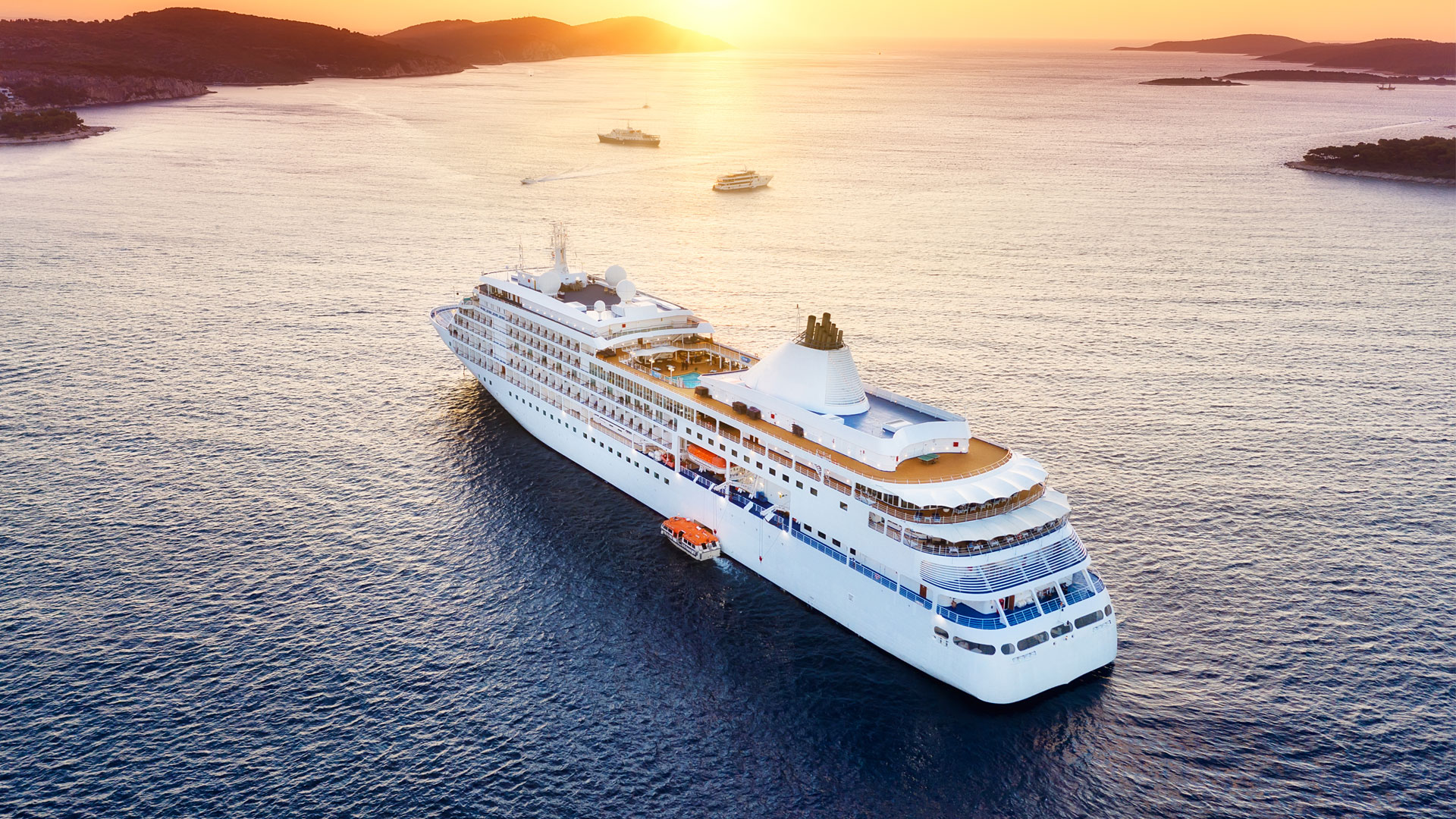
The Role of AI Visibility in Cruise Brand Discovery
AI visibility for cruise lines depends on how clearly a brand is represented across the broader travel information ecosystem. AI systems interpret cruise brands through signals such as:
-
experience positioning (luxury, family, adventure, expedition)
-
destination expertise
-
onboard experience narratives
-
media mentions and travel publications
-
consistent brand classification across sources
When these signals are clear and widely corroborated, cruise brands are more likely to be selected when AI systems generate recommendations.
Simulated AI Visibility Strategy
In this simulated scenario, a mid-size cruise operator specialising in Mediterranean and Caribbean itineraries seeks to improve its presence in AI-driven travel discovery. The visibility strategy focuses on strengthening signals that help AI systems interpret the brand correctly. Key elements include:
Experience classification
Clarifying the cruise line’s position within the travel market (luxury, premium, expedition, or family-oriented).
Destination authority
Publishing structured content around the destinations the cruise line specialises in, reinforcing topical expertise.
Cross-source travel mentions
Expanding the brand’s presence across travel publications and travel information sources so that AI systems encounter consistent references to the brand.
Experience-based content
Developing narratives around onboard experiences, itineraries, and guest experiences that help AI systems associate the brand with specific traveller intents.
Structured information architecture
Ensuring that ship fleets, destinations, and cruise experiences are presented in formats easily interpreted by machine learning systems.
Simulated Outcome
As the cruise brand’s signals become clearer and more consistent across the travel ecosystem, the probability of inclusion in AI-generated travel recommendations increases. Instead of remaining absent from AI-mediated discovery, the brand begins appearing in answers to prompts such as:
-
“Best Mediterranean cruise lines”
-
“Luxury cruise brands worth considering”
-
“Premium cruise lines for couples”
This shift moves the brand from invisible in AI discovery to eligible for inclusion in recommendation shortlists.
Why AI Visibility Matters for Cruise Brands
Cruise travel decisions involve high commitment and long planning cycles. The brands that appear earliest in the discovery process often shape the shortlist travellers explore further. As AI assistants increasingly guide travel research, cruise lines that strengthen their AI visibility signals will be better positioned to appear in these early recommendation moments.
About the Simulation
This case study represents a simulated example used to illustrate how AI-driven discovery environments influence brand visibility. It demonstrates how cruise lines can strengthen their presence in AI-mediated travel research through clearer entity signals, structured information, and cross-source corroboration.
AI travel assistants are increasingly shaping how travellers discover cruise brands, hotels, and destinations. Netsleek helps travel companies strengthen their presence in AI-generated recommendations through Generative Engine Optimisation (GEO) and AI Visibility Engineering.